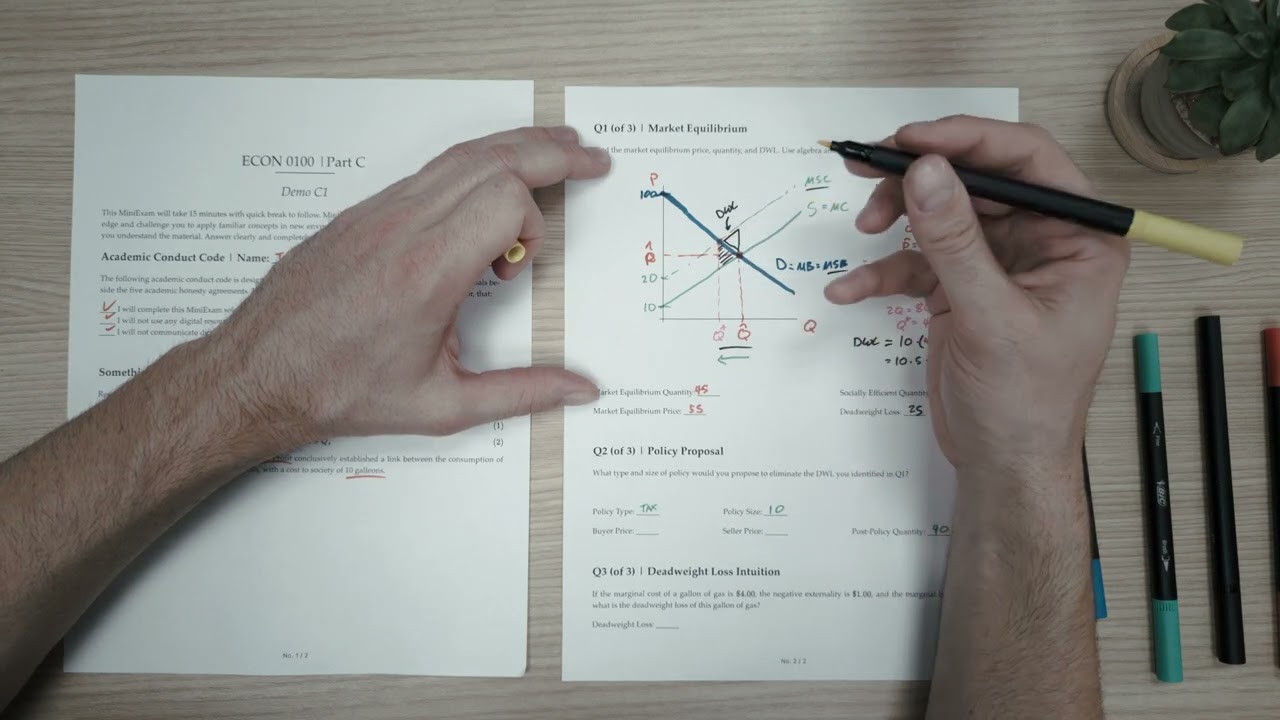
Part C | Externalities
Externalized costs and benefits lead to inefficient marketsPart B showed us how markets coordinate perfectly when conditions are right, delivering efficient outcomes that maximize total surplus. But what happens when those perfect conditions break down? Part C reveals the dark side of markets—when private incentives misalign with social welfare, creating externalities and market failures that require government intervention to restore efficiency. You'll discover how pollution, taxes, and corrective policies can either harm or heal market outcomes.
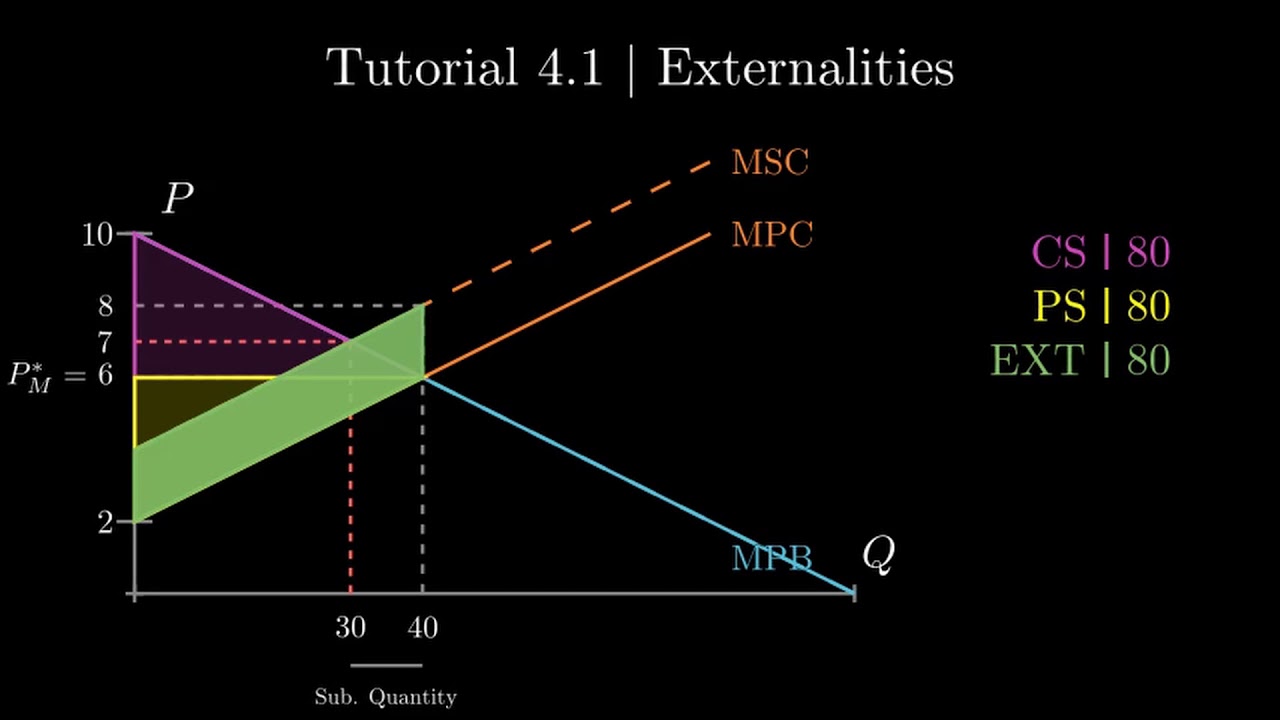
Block C1 | Externalities
When private costs don't equal social costs, markets produce too much or too little, creating inefficiency.
-
Exercise C1 in class
-
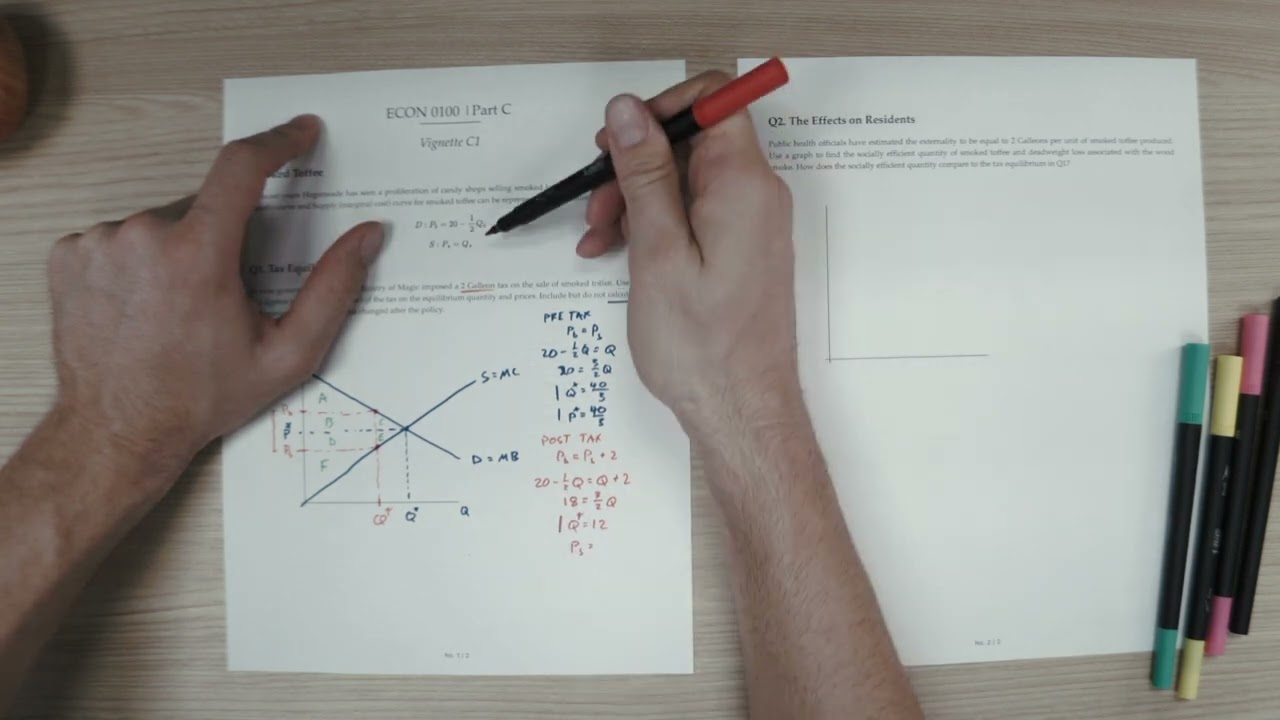
Block C2 | Taxes
Taxes create deadweight loss by driving a wedge between what buyers pay and sellers receive, reducing total surplus.

Block C3 | Corrective Taxes
Pigouvian taxes can internalize externalities and restore market efficiency by aligning private and social costs.

-
Exercise C3 in class
-
Vignette C3 recitation
Checkpoint C
Checkpoint C covers everything in Part C. You will begin to learn that if you understand the concepts and do the work in the Vignettes, Homework, and Demo, you're going to be in good shape on the Checkpoint.